

Blog
Claws and Effect: How Cat Anatomy Shapes Their Behavior

[ad_1]
Cats, with their enigmatic personalities and graceful movements, have captivated humans for thousands of years. Their anatomy is intricately intertwined with their behavior, highlighting how nature has equipped these felines for survival, play, and companionship. Understanding the anatomy of cats, particularly their claws, teeth, and senses, reveals why they behave the way they do.
The Anatomy of a Cat
Claws: Tools of Survival
One of the most distinctive features of cats is their retractable claws. Unlike many animals, cats can protract or retract their claws at will. This ability provides them with several advantages:
-
Silent Treading: When hunting prey, a cat can retract its claws to move silently. This stealth capability is crucial for predators, allowing them to approach their target without alerting it.
-
Climbing Tools: Cat claws are sharp and curved, enabling them to climb trees, fences, and other surfaces easily. This climbing ability serves not just for escaping predators but also for stalking prey and surveying their territory.
-
Self-Defense: Claws serve as a primary line of defense. In confrontations with other animals, cats will extend their claws, using them to capture or fend off adversaries.
Teeth: The Hunter’s Tools
Alongside their claws, cats have a unique dental structure designed for their carnivorous diet. Their teeth, particularly the sharp canines, are essential for biting, holding, and tearing flesh.
-
Killing Power: The canines enable cats to deliver a swift and lethal bite, perfect for subdued prey. Their molars, on the other hand, effectively shear meat.
-
Grooming: Interestingly, cats also use their teeth for grooming. The rough texture of their tongues, equipped with tiny papillae, complements their dental structure by helping to clean their fur and remove loose hair and dirt.
Sensory Organs: Navigating the World
Cats are equipped with extraordinary sensory faculties that significantly influence their behavior. Their vision, hearing, and smell are finely tuned to their predatory lifestyle.
-
Vision: Cats have excellent night vision, an evolutionary adaptation for hunting in low-light conditions. Their eyes contain a high number of rods, making them adept at detecting movement in darkness. This ability is why they often seem to pounce on invisible insects or shadows.
-
Hearing: Cats can hear sounds at frequencies up to 64 kHz, far beyond the human range. This acute hearing enables them to detect mice and other small animals, even when they’re hidden.
-
Smell: The scent of their environment plays a crucial role in a cat’s behavior. Cats have a keen sense of smell, allowing them to identify territory, potential mates, and even food sources. Their sensitive noses guide their social interactions and territorial marking.
Behavioral Manifestations
The anatomical features of cats directly influence their behaviors, leading to a wide array of actions and traits.
-
Purring and Kneading: Cats often purr when content, an instinct from kittenhood when nursing. Kneading, or pushing their paws into soft surfaces, is a reminiscence of kneading their mother’s belly for milk. Both behaviors are rooted in their anatomy and reveal their comfort.
-
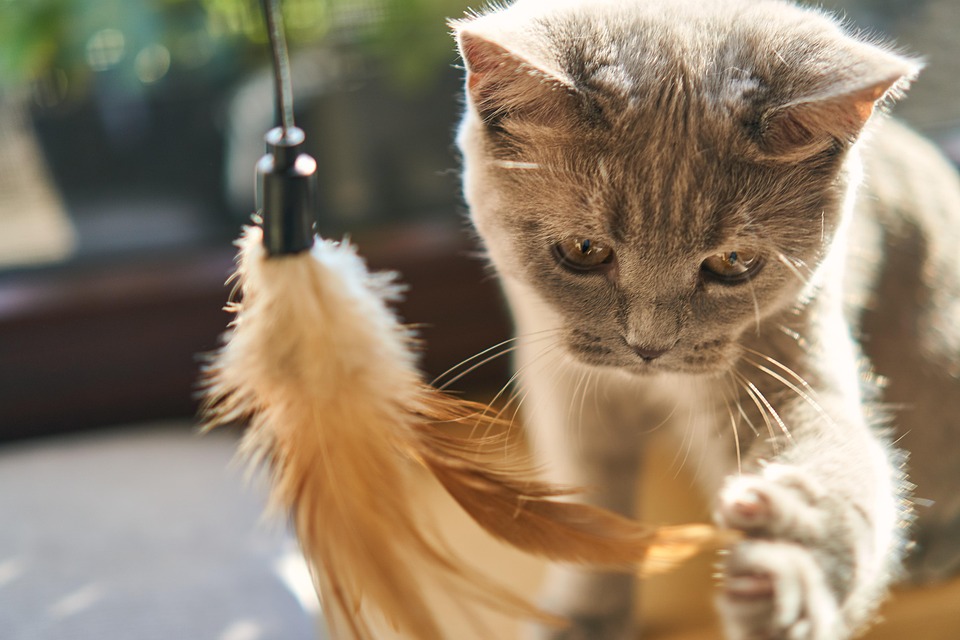
Play Behavior: Cat play mimics hunting behavior. They stalk, pounce, and capture toys or other objects, illustrating the instinctual need to practice their predatory skills, which hinge on their powerful anatomy.
-
Territoriality: Cats mark territory using scent glands located in their paws, cheeks, and forehead. Their sharp claws help them scratch surfaces, leaving behind physical and scent marks to announce their presence.
Conclusion
The anatomy of cats is a fascinating blend of functional design and behavioral adaptations. Their claws, teeth, and sensory faculties shape every aspect of their lives, from hunting to social interactions. By understanding how these physical features affect behavior, we can better appreciate and care for our feline friends.
FAQs
Q1: Why do cats knead?
A1: Kneading is a behavior derived from kittenhood, where they knead their mother’s belly to stimulate milk flow. As adults, they knead to express comfort and affection.
Q2: Why do cats scratch furniture?
A2: Cats scratch to mark territory, maintain claw health, and stretch their muscles. Providing them with scratching posts can satisfy this instinct.
Q3: How important is a cat’s sense of smell?
A3: Extremely! Cats rely heavily on their sense of smell for communication, identifying food, and mating. Their acute olfactory senses help them navigate their environment.
Q4: Can all cats retract their claws?
A4: Yes, domestic cats and most wild feline species possess the ability to retract their claws, allowing for silent movement and better agility.
Q5: How do claws affect cat play?
A5: Cats use their claws during play to stalk and pounce on toys, mimicking hunting behavior. This is important for their physical exercise and mental stimulation.
[ad_2]